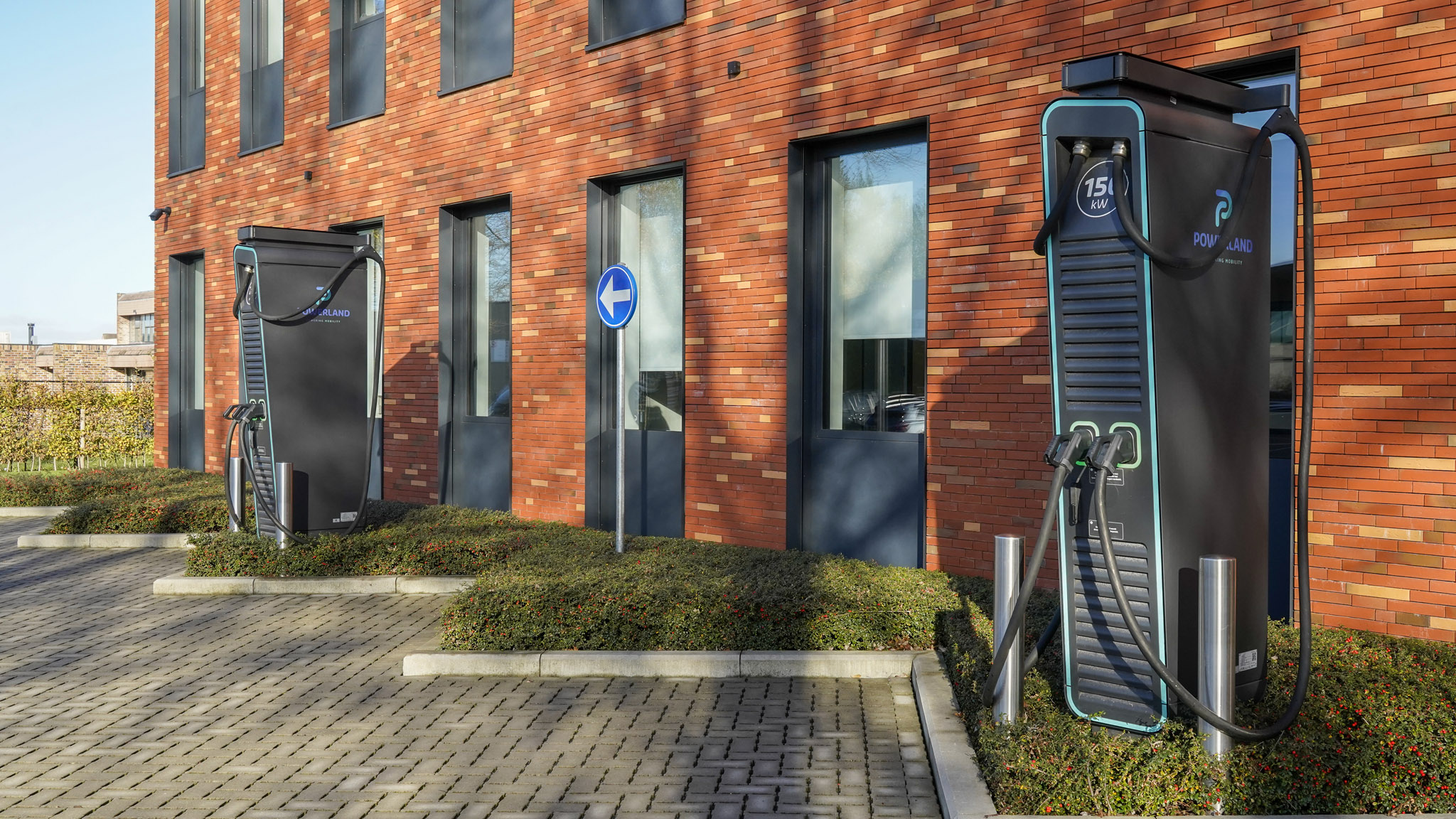
DC-snelladers voor bedrijven en voertuigvloten
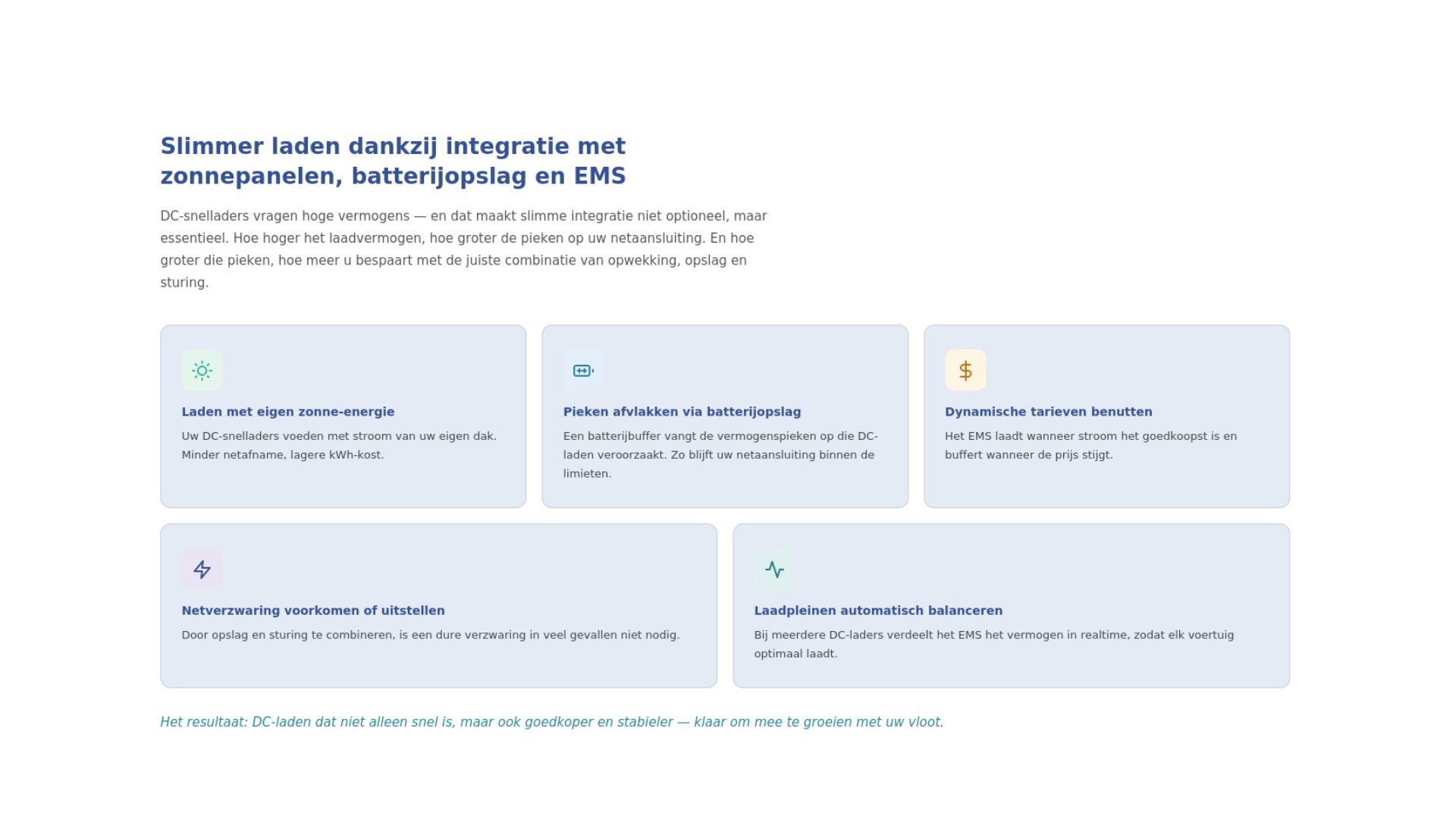
Powerland ontwerpt en installeert complete DC-laadoplossingen, inclusief integratie met zonnepanelen, batterijopslag en slimme sturing via EMS, zodat uw site stabiel en toekomstproof blijft.
DC-laden voor auto’s, bestelwagens, trucks en bussen
DC-snelladers zijn compatibel met alle moderne voertuigen die beschikken over CCS2-aansluiting:
- Personenwagens: snelle bijlading voor klanten en werknemers
- Bestelwagens: ideaal voor korte stops tijdens de werkdag
- Vrachtwagens: hoge laadsnelheden voor logistieke rotaties
- Bussen: depot charging met voorspelbare laadvensters
Publieke vs. private DC-snelladers
Private DC-snelladers
- voor interne vloot
- voorspelbare laadmomenten
- locatie niet bepalend voor ROI
- ideaal met batterijbuffering
Publieke DC-snelladers
- gericht op passanten & klanten
- locatie bepaalt rendabiliteit
- geschikt voor retail, horeca en tankstations
- vereist goede zichtbaarheid en bereikbaarheid
We were looking for a partner to guide us through EV charging. We found a team we trust completely.
Tom Ghesquière
Laadpunt Ghesquière Ardooie
Questions about
charging infrastructure
Yes, from 2-3 charging points automatic load balancing is highly recommended to avoid peak consumption.
Not necessarily. Whether you need to upgrade your electricity connection depends on your current connection value (single-phase or three-phase), the desired charging capacity and how many other consumers are running simultaneously. In many cases an upgrade is not needed at all: with dynamic load balancing the charging station automatically adjusts the power based on available capacity, so your fuse box never gets overloaded. Combine charging infrastructure with battery storage or solar panels and the available capacity is used even smarter. Powerland first examines your electrical installation for every project - at home or at work - and only then advises whether an upgrade is necessary.
Not the type of business, but the traffic volume, charging profile and grid capacity determine whether a DC fast charger is profitable. Therefore we do NOT distinguish businesses, but charging scenarios.
Charging scenario 1: High throughput & short stop time
Suitable for: public charging, retail, gas stations, highway exits, high-traffic zones
Characteristics:
- many vehicles per day
- short stops (15-30 min)
- high occupancy rate
- early or late need for battery buffering
Charging scenario 2: Medium throughput & mixed use
Suitable for: offices, showrooms, smaller depots, office zones
Characteristics:
- mix of employees, visitors, occasional vehicles
- vehicles sometimes stay on site for longer periods
- lower grid impact
Charging scenario 3: Internal fleet with predictable charging moments
Suitable for: transport, logistics, bus companies, courier services, garbage trucks, forklifts
Characteristics:
- vehicles return to fixed base
- often charge in the evening or at night
- very predictable charging profile
- perfect match with battery storage